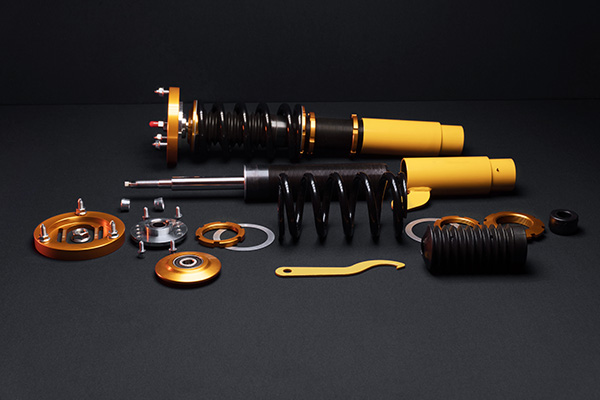
Bad shocks and struts do not just make the ride annoying; they can also cause damage to the suspension. They let the vehicle move too much, and that extra motion is transmitted to the tires, bushings, mounts, steering parts, and even the brakes.
That is where the real cost starts.
A car can still start, steer, and stop with worn shocks or struts, so drivers sometimes live with the bounce for months. The trouble is that the rest of the suspension has to absorb the movement those parts are no longer controlling.
What Shocks And Struts Actually Control
Springs hold the vehicle up. Shocks and struts control how those springs move after a bump, dip, lane change, or hard stop. Without that control, the vehicle keeps bouncing instead of settling back down quickly.
Struts also act as a structural part of the suspension on many vehicles. They help support alignment angles and steering geometry. Shocks are usually separate dampers, but they still play a major role in keeping the tires planted.
When either part wears out, the tire spends more time skipping, hopping, or pressing unevenly into the road. You may feel that as a floaty ride, extra sway, or a front end that dives more than it used to when braking.
How Bad Shocks And Struts Hurt Tires
Tires tell on weak suspension faster than most drivers expect. When a shock or strut cannot control wheel movement, the tire can bounce slightly as it rolls. That creates cupping, scalloped tread, or a choppy wear pattern that gets louder over time.
You might hear a humming noise and think the tires are just getting old. Sometimes they are. But if the tread feels uneven when you run your hand across it, the suspension may be part of the problem.
Replacing tires without checking worn shocks or struts is how a new set gets chewed up early. We see this when drivers keep buying tires, but the real issue underneath never gets fixed.
The Rest Of The Suspension Starts Working Harder
Suspension parts are built to move, but not wildly. Worn shocks and struts allow more movement through control arms, bushings, ball joints, sway bar links, and mounts. Those parts then take extra stress every time the car hits a rough patch of road.
Rubber bushings can crack sooner. Ball joints can develop play. Strut mounts can start clunking. Sway bar links can rattle. One worn damper does not instantly destroy everything around it, but months of uncontrolled motion can wear out nearby parts faster than normal.
That is why a bouncy ride is more than a comfort issue. It is usually a sign that the suspension is losing control.
Brake Feel Can Change Too
Bad shocks and struts can affect braking by changing how the weight transfers. When the front end dives hard, the tires are not staying as evenly loaded as they should. That can make the car feel less steady during a quick stop.
You might notice the nose dropping too much, the rear feeling light, or the steering wheel moving around when braking on rough pavement. If the tires are already cupped or the front suspension has some play, the feeling gets worse.
The brakes may still be working, but the suspension isn't helping the tires stay settled. That makes the whole car feel less predictable.
Signs Drivers Usually Notice First
The first signs are not always dramatic. They show up in normal driving, especially over roads you drive every week.
A few common clues include:
- The car keeps bouncing after dips or speed bumps
- The front end dives hard when braking
- The vehicle sways more in turns or during lane changes
- Tires show cupping, chopping, or uneven edge wear
- You hear clunks near the strut mount area
- The ride feels floaty on the highway
- One corner feels harsher or weaker than the others
If several of these show up together, shocks and struts move high on the list. A good inspection should also check the surrounding suspension parts, because worn dampers and worn joints can show similar symptoms.
Why Waiting Usually Costs More
Worn shocks and struts rarely fix themselves or stay the same forever. The ride keeps getting looser, tires keep wearing unevenly, and small noises become easier to hear. By the time the vehicle feels unsafe, other parts may already be involved.
Regular maintenance helps catch leaking struts, damaged mounts, loose links, and uneven tire wear before the vehicle starts feeling sloppy every day. Catching it early also gives you a cleaner repair plan. Sometimes the main issue is the shocks or struts. Other times, the worn damper has already stressed the mount, tire, or front-end parts.
The sooner you know, the easier it is to decide what needs attention now and what can wait.
Get Suspension Repair In Chantilly, VA, With Foreign Auto Services
If your vehicle feels bouncy, loose, or noisy, or if your tires are wearing unevenly, Foreign Auto Services in Chantilly, VA, can check the shocks, struts, mounts, tires, and related suspension parts.
Book a visit and get the ride tightened up before worn dampers keep working against the rest of the suspension.